
Duolingo’s Design
An independent qualitative study of how Duolingo users define success, what keeps them coming back, and where deeper engagement quietly breaks down.
* Conducted independently as a student project for my Exploratory Research Design course. This is not an official client deliverable.

How do Duolingo users define success, what keeps them coming back, and where does deeper engagement break down?
- 1. Duolingo is not seen as a path to fluencySimplify. Most users come for light enrichment. Bombarding them with every feature is a deterrent, not a delight.
- 2. Users take shortcuts whenever they canEnforce some accountability. Borrow the Streak Freeze model: a few weekly "overrides" turn skipping into an active choice, not the default.
- 3. Reward screens add unwanted frictionGive an escape route. A simple "Skip" or "X" would preserve a sense of autonomy exactly where it counts.
- 4. Premium features solve app frustrationsMake Premium a luxury. Paying for Premium should enhance the users' experience, not unlock basic functionality.
Conversation, then hands-on ideation
Each of the seven sessions paired a guided conversation about how participants actually use Duolingo with three live exercises in Figma — turning self-report into something we could see and probe.
Conversation
A guided talk about goals, habits, frustrations, and the moments users keep coming back for.
"Magic Wand" layout
Participants rebuilt the home screen in Figma to reveal what they actually value.
Prototype critique
Hands-on reactions to designs based on prior-round feedback.
Card sorting
Sorting lesson types to understand how users mentally group content.
Seven interviews, three personas
The interviews clustered into three distinct relationships with the app — each defining “success” in its own way.


A night owl living a stressful downtown life. Took required Spanish in high school but hasn’t studied since. His real goal right now is graduating with a job lined up — travel and restaurants can wait.
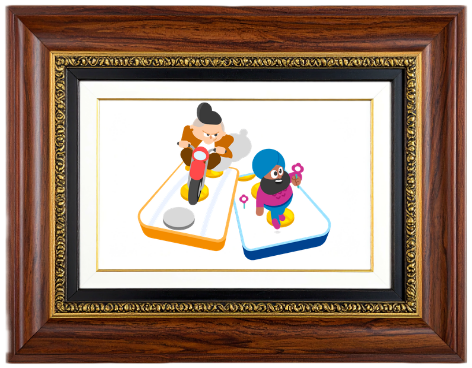

An ambitious 2nd-year PhD student determined to finish in four years instead of the usual five-to-seven. Type-A, meticulously planned, caffeine-fueled — and also training for a marathon.


Linguistics is her degree, her job, and her favorite cocktail-party topic. Newly remote, she misses her commute and routine — so she’s actively rebuilding daily structure into her day.
What broke down — and what to do
Duolingo’s strongest pull isn’t language learning — it’s the gamified ritual of showing up.
Design for the honest goals users already bring.
That ritual is fragile. When reward screens overstay their welcome, when shortcuts become the path of least resistance, and when Premium reads as “pay-to-remove-pain,” engagement quietly hollows out.
The biggest opportunity isn’t another streak mechanic — it’s designing for the honest goals users already bring to the app, and protecting their autonomy along the way.