
Digital Detoxes
A 9-week independent study of how people actually reduce digital distraction. Compared detox methods across the market to find themes, then translating them into product recommendations for BRICK.
* Conducted independently as a student project for my UX Research Fundamentals class. BRICK framed as the stakeholder; this is not an official client deliverable.
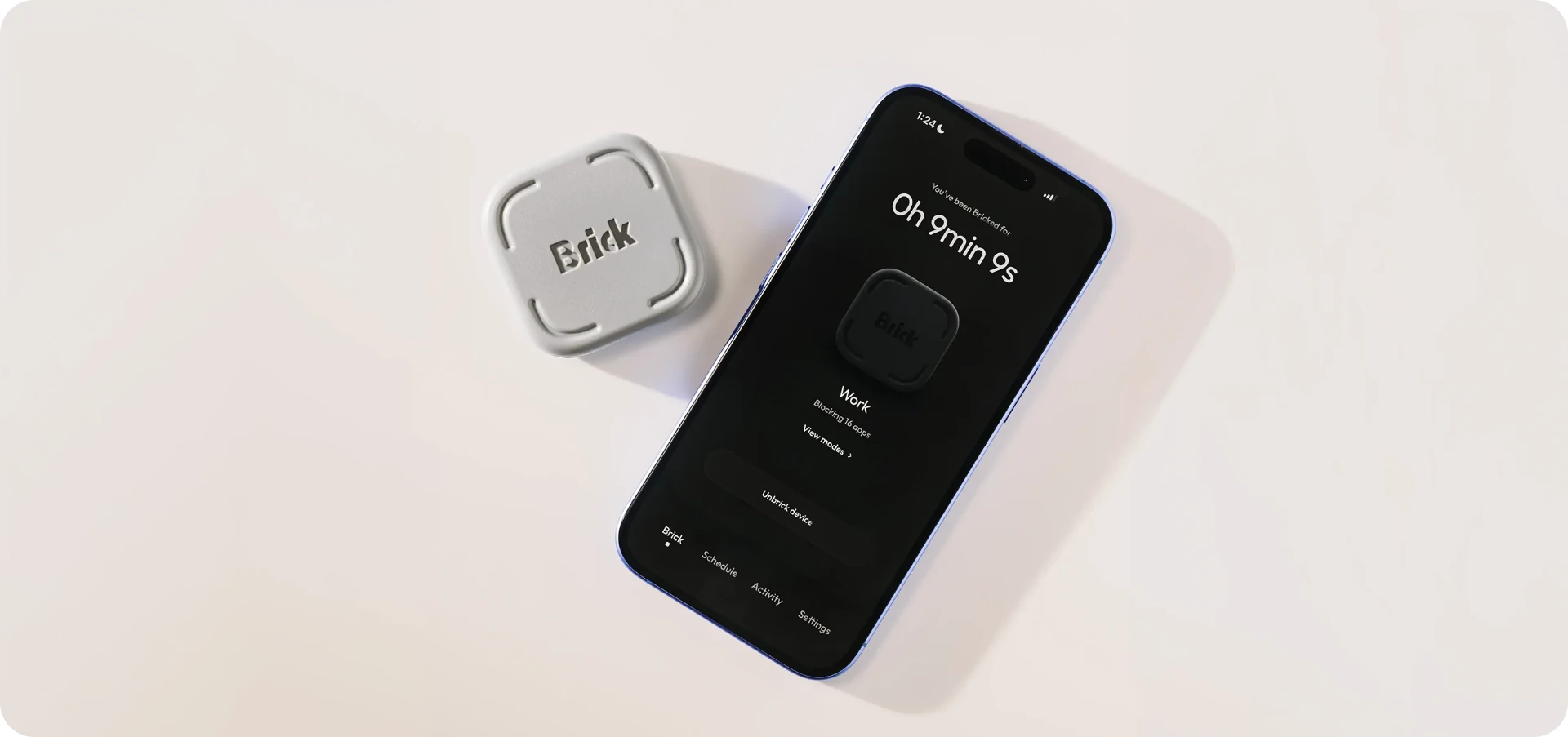
How might we help people sustain reductions in digital distraction — beyond what built-in screen-time tools achieve on their own?
- 1. Effort-based deterrence beats time limitsLean into effort-based friction rather than time-based restrictions alone.
- 2. Users quickly grow desensitized to interventionsIntroduce harder-to-bypass restrictions or external accountability.
- 3. Most believe tools alone can’t solve distractionPosition BRICK as scaffolding for change, not a standalone fix.
- 4. People want flexibility, not total restrictionBalance restriction with personalized, flexible access settings.
Comparing the whole field, not one product
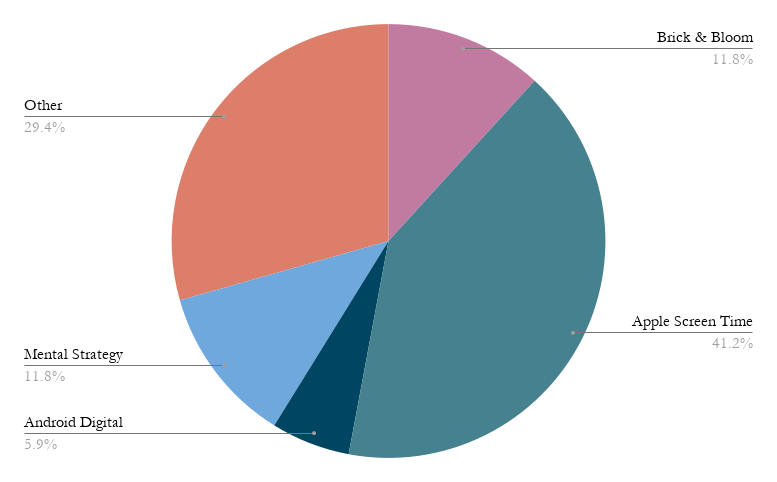
Although the project’s focus was BRICK, the study covered a wide range of screen-time management methods. Since BRICK exists in a crowded market, comparing it against free, built-in tools like Apple Screen Time and Android Digital Wellbeing gave a more complete picture of the field.
Most participants were recruited through Reddit — specifically threads on digital wellbeing and screen time — since they represent people actively trying to change their behavior.
Four patterns across methods
Despite the variety of tools people tried, the same behavioral patterns surfaced again and again — each pointing to a concrete product implication for BRICK.
Effort-based deterrence beats time limits.
- Small inconveniences — reinstalling apps, physical separation — outperform digital timers
- App deletion was cited as highly effective because re-downloading felt "too annoying"
- Users described laziness as a surprisingly useful constraint
Lean into effort-based friction rather than time-based restrictions alone.
The effort to redownload an app is greater than the effort to find something else to do (i.e., I am lazy to redownload).
Users quickly grow desensitized to interventions.
- 10 of 13 participants regularly "override" the limits they set on apps
- Many said they override limits "without thinking"
- Effectiveness improved only when access was externally restricted
Introduce harder-to-bypass restrictions or external accountability.
Since I just override the screen time limit on TikTok and don’t have one on Instagram, I needed a more aggressive way to stop doom scrolling.
Most believe tools alone can’t solve distraction.
- Respondents described distraction as psychological, cultural, or structural
- Tools were framed as support systems, not cures
Position BRICK as scaffolding for change, not a standalone fix.
[Apple Screen Time is] effective as a log but requires personal buy-in and mental strategy to not fade into the background as just another thing to track.
- Participants needed access for work, emergencies, or coordination
- Several abandoned tools that blocked necessary access
- Flexible tools were far more likely to be sustained
Balance restriction with personalized, flexible access settings.
Strict methods made me abandon them. I need Facebook during natural disasters and to coordinate with volunteer groups.
Digital distraction is an intervention-design challenge, not an awareness problem.
Durable detoxes raise the cost of relapse and leave room for real life.
Across methods, the most durable strategies share a shape: they raise the cost of relapse, resist habituation, and leave room for the messy realities of everyday life. Time limits alone rarely survive contact with a determined user.
For BRICK specifically, the strongest opportunity is to position the product as scaffolding for sustained behavior change — pairing physical friction with flexible, user-controlled access rather than competing with built-in tools on restriction alone.