






Sophia Emy

Duolingo's Design: What the Research Says


* This analysis was conducted independently as a student project for my Exploratory Research Design course and does not represent an official client deliverable.

THE QUESTION: How might we better support language learners in achieving their goals?

PROJECT RUNDOWN:

For my Exploratory Research Design course, I ran an independent qualitative study on Duolingo — looking at how users define success, what keeps them coming back, and where deeper engagement quietly breaks down.

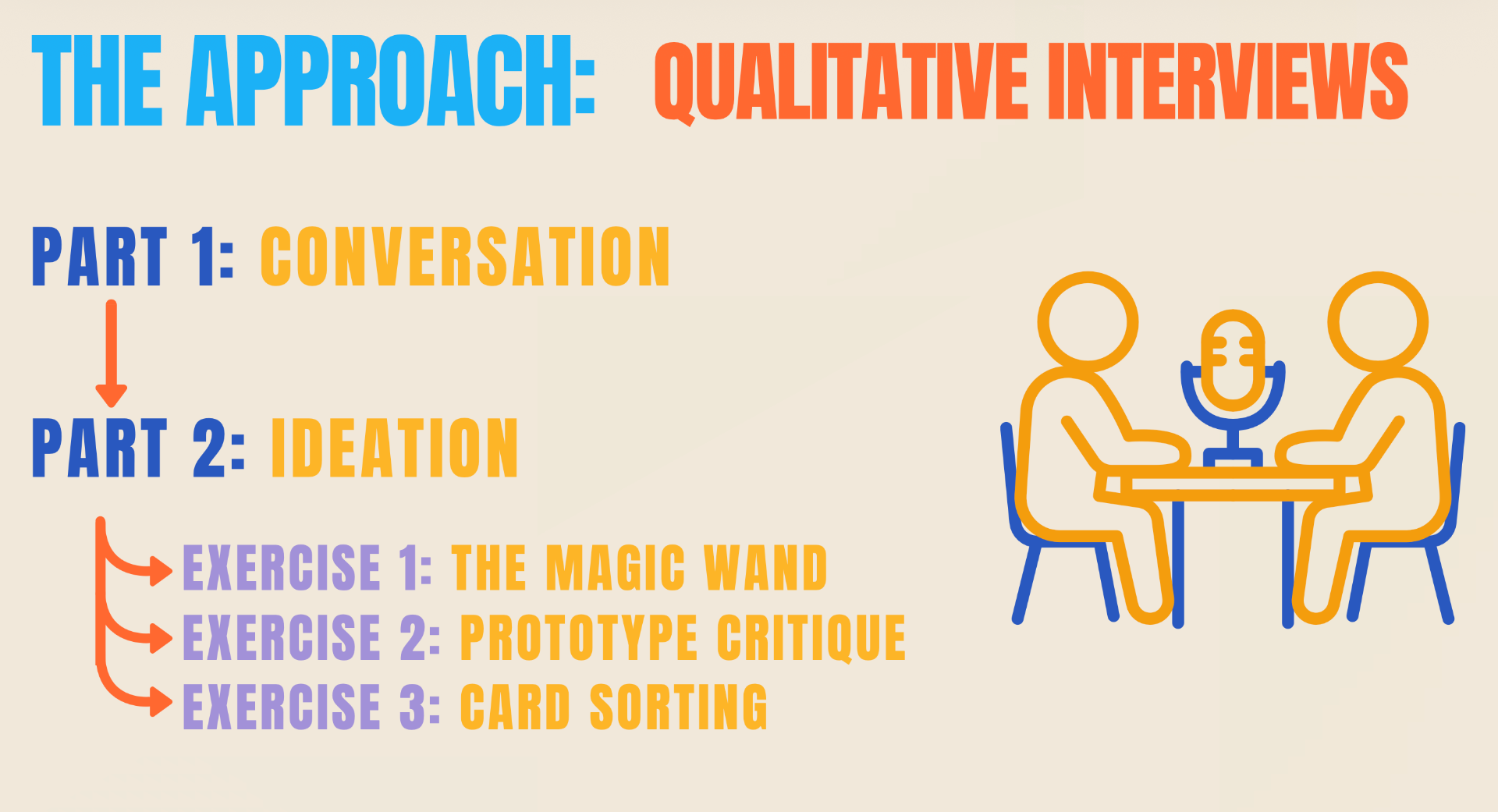
Seven semi-structured interviews paired conversation with three hands-on Figma exercises, then a thematic analysis turned the transcripts into behavioral patterns and design opportunities.

Duolingo characters illustration including Duo the owl
Image credit: blog.duolingo.com

MY ROLE & RESPONSIBILITIES

  • Designed the study and research framing
  • Recruited and ran 7 semi-structured interviews
  • Built Figma prototypes for ideation and critique
  • Conducted thematic analysis across transcripts
  • Translated findings into design opportunities

METHODS:

  • Semi-structured interviews (n=7)
  • "Magic Wand" layout-building exercise
  • Prototype critique on prior-round feedback
  • Card sorting of lesson types
  • Thematic analysis & persona synthesis
  • Tools: Figma, FigJam, Otter, Google Docs

THE IMPACT:

  • Surfaced 3 distinct user personas across the 7 interviews
  • Reframed retention away from streaks as a single success metric
  • Identified where reward screens turn into friction
  • Translated insights into 4 concrete design opportunities

The Approach:

Each interview combined a conversation about how participants use Duolingo with three ideation exercisesdone live in Figma. Click through the deck below to see how each piece of the session was structured.

Part 1 — Conversation

Semi-structured interviews

Part 1 — Conversation

Each session opened with a guided conversation about how participants actually use Duolingo: their goals, habits, frustrations, and the moments they keep coming back for.

Who Are We Talking About?

7 interviews → 3 user personas.

Tap each image to learn more.

SCOTT portrait

SCOTT

The streak loyalist

22 · Current student · Chicago, IL

Scott lives a stressful life in downtown Chicago. He loves the city lifestyle — especially since he's a night owl and can't have everything shutting down at 6 PM. He took the required Spanish courses back in high school, but hasn't spent time in a language classroom since. Right now, his main goal is graduating with a job lined up. New restaurants and travel abroad are on the to-do list — but they'll have to wait.

SCOTT nameplate
DANA portrait

DANA

The language lover

28 · Speech pathologist · Providence, RI

Dana lives a linguistics-centered life. It's what she studied in graduate school, it's now her job, and it's her favorite topic at cocktail parties. She lives in a city-ish town, perfect for her adventurous-homebody spirit. She recently switched to a work-from-home role and misses her daily commute, lunches with colleagues, and set schedule — so she's actively building structure and routine back into her day.

DANA nameplate
ROXY portrait

ROXY

The Diamond League leader

24 · PhD candidate · San Francisco, CA

Roxy is an ambitious 2nd-year PhD student studying biology, determined to finish her degree on an accelerated timeline. Most students take 5–7 years; she's going to do it in 4. Her type-A personality, detailed life planning, and caffeine-fueled all-nighters have gotten her this far — so what's two more years? Oh, and she also wants to run a marathon.

ROXY nameplate

The Insights:

1. Duolingo is not seen as a pathway to fluency.

Even users who genuinely want to learn a language describe Duolingo as light enrichment. Most report success with vocab and basic grammar, but feel unprepared to actually use the language in real life.

One participant, asked how many languages he speaks: "Speak? Well, none." — despite a decade-long streak.

2. Users will take shortcuts whenever they're available.

Every interviewee admitted to skipping questions or peeking at hints. Even features participants described as educational were routinely bypassed in the name of finishing faster.

3. Non-functional transition screens create friction.

Popups meant to feel rewarding — "Good job!", coin animations, treasure chests — read as obstacles when there's no way to dismiss them. Without an X button, users feel trapped on a screen designed to delight them.

4. Premium subscribers engage more deeply.

Super Duolingo users were the only ones who lingered on the app after finishing their daily lesson. Yet free users, while envious of those features, adamantly refused to pay for them.

Design Opportunities:

1. Simplify.

Most users come to Duolingo for light enrichment. Bombarding them with every feature is a deterrent, not a delight.

2. Enforce some accountability.

Borrow the Streak Freeze model: a limited number of weekly "overrides" turns skipping into an active choice, not the default.

3. Give an escape route.

Right now, paying for Super Duolingo fixes a broken free experience. Premium should add value, not remove pain.

4. Make Premium an enhancement.

Today, paying for Super Duolingo fixes a broken free experience. Premium should add value, not remove pain.


PROJECT WRAP-UP:

Across personas, Duolingo's strongest pull isn't language learning — it's the lightweight, gamified ritual of showing up. That ritual is fragile: when reward screens overstay their welcome, when shortcuts become the path of least resistance, and when Premium reads as "pay-to-remove-pain," engagement quietly hollows out. The biggest opportunity isn't another streak mechanic — it's designing for the honest goals users already bring to the app, and protecting their autonomy along the way.